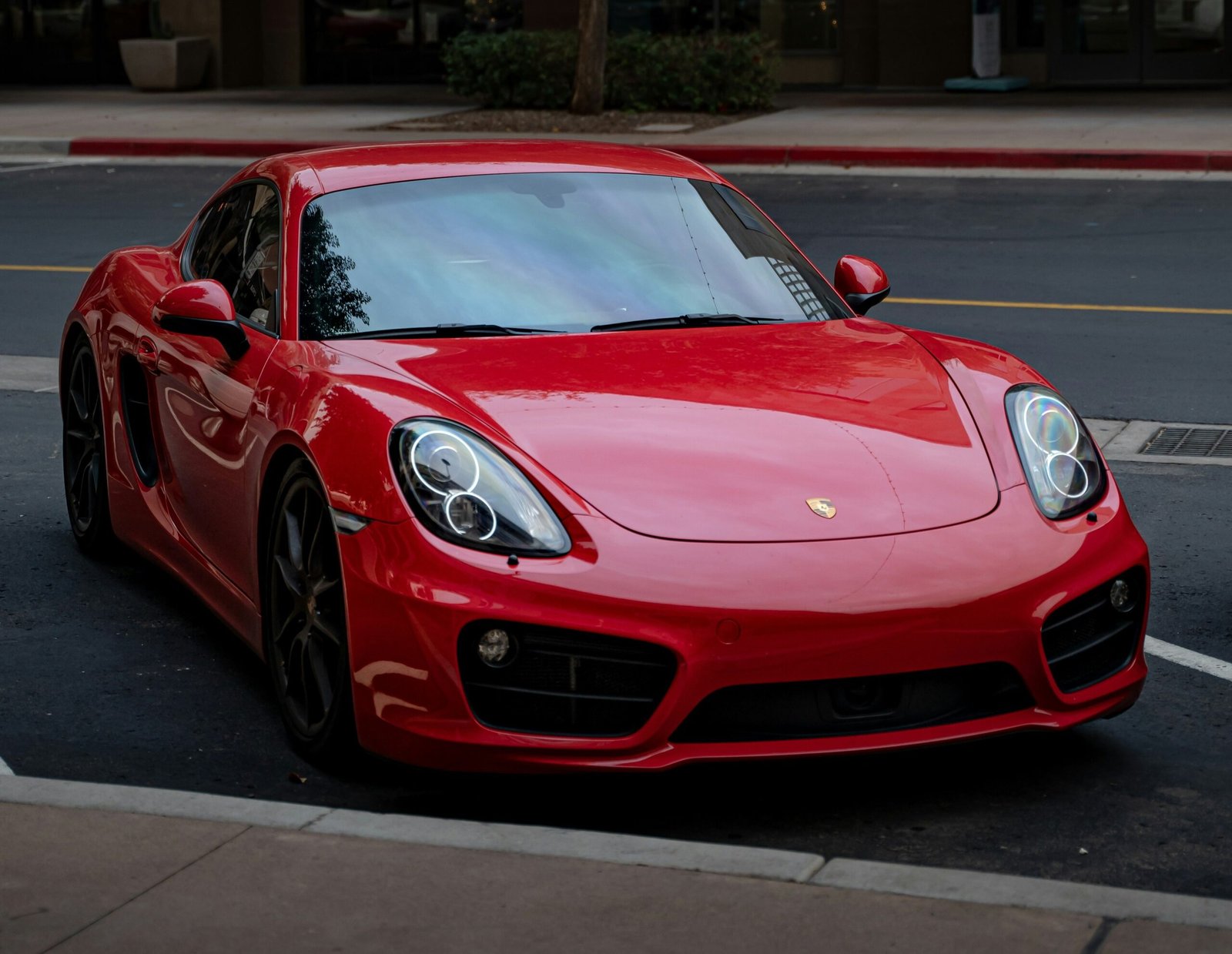
There are cars that transport you from one place to another—and then there are cars that transform the journey itself. The red sports coupe before us belongs firmly to the latter category. Low-slung, poised, and unapologetically confident, it is a reminder that great automotive design does not shout; it holds eye contact.
From the front, the form is unmistakably athletic. The wide stance and gently sloping bonnet suggest balance and intent rather than brute aggression. Oval headlamps glow with a precision that feels almost watch-like, as though engineered with the same obsession one associates with fine European horology. Every surface feels deliberate, sculpted by airflow rather than fashion.
What makes this car truly compelling is its restraint. The red paint is vivid, yet refined—chosen not for spectacle but for emotion. It reflects its surroundings subtly, allowing architecture, light, and shadow to play across its curves. Parked or in motion, it never looks static; it looks alive.
Step inside—at least in imagination—and the philosophy continues. This is a driver-focused machine, where ergonomics are treated as art. The cabin is not overloaded with screens or distractions. Instead, it offers clarity: a place where steering input, throttle response, and road feedback form a quiet dialogue between human and machine.
Performance here is not about headline numbers alone. It is about confidence on a winding road, the way the chassis settles into a corner, the way acceleration feels linear and composed. This is performance that rewards finesse, not force—a trait increasingly rare in a world obsessed with excess.
For a posh automobile magazine, this car represents something deeper than speed or status. It represents a mindset: one that values purity over noise, balance over bravado, and experience over exhibition.
Some cars are bought.
Others are understood.